


This Week in MedEd
13 open funding calls, 73 upcoming events, 43 live jobs (3 new, 9 closing this week), including:
💰 Research in Education Grant (up to $100,000 from FAER and the American Board of Anesthesiology, for US anesthesiology faculty, deadline 15 Feb 2027)
🎓 AMEE 2027 (Helsinki, 28 Aug to 1 Sep 2027)
💼 Associate Professor in Digital Health, Artificial Intelligence and Society (Trinity College Dublin School of Medicine, closes 12 Nov 2026)
The full database, with deadlines, links and eligibility, free for 30 days:

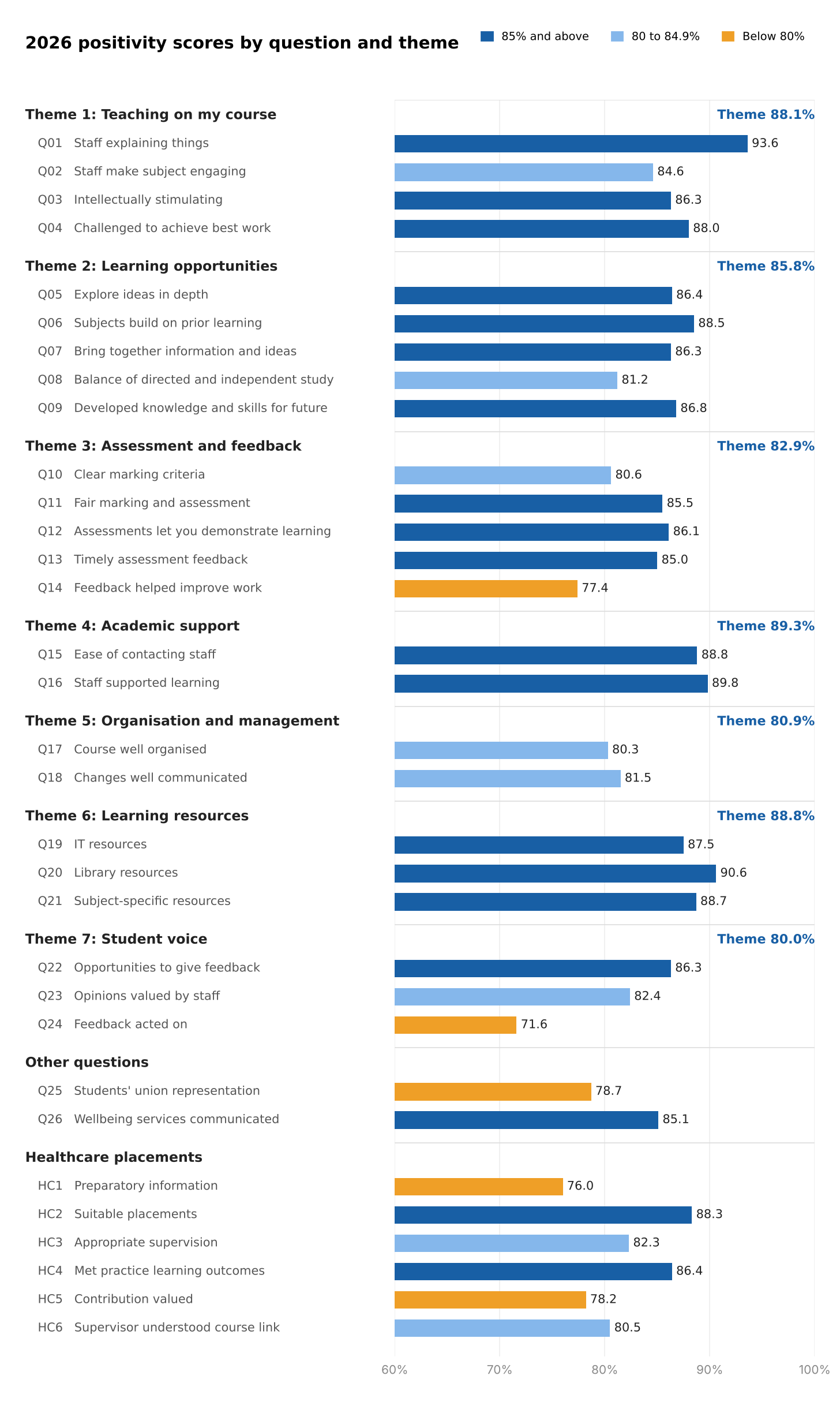
One thing we are always trying to do better is give students more frequent, valuable and actionable feedback. This is often driven by the evaluations that students complete about our teaching; in the UK this is the National Student Survey, where, across the sector, measurements relating to feedback are stubbornly low1.
In medical education specifically, we know that observation and feedback drive the development of competence, and we also know that the observation is usually fleeting, the note is usually thin, and the report that was supposed to teach someone something
gets a tick and a “good work” because the next patient is waiting. Feedback is the part of teaching that is most valued and most routinely under-supplied. This week I am looking at four papers that ask whether AI can take some of that load.
Key points:
A systematic review found only 7 studies of LLM feedback in imaging education, all in radiology residents, with gains in report quality and discrepancy detection but no robust evidence yet of educational effectiveness.
LLM feedback was most reliable on standardised tasks and weakest on interpretive ones, and fine-tuned models generally beat general-purpose chatbots.
Educators without programming skills can build a comment-based, iterative feedback system from three off-the-shelf tools, but the quality of the feedback is untested.
An ambient AI handoff assistant produced about 3.6 errors per note, and trainees said spotting those errors was part of what they learned.
An AI coaching agent promoted self-reflection but felt formulaic, shallow in its empathy and unable to move conversations forward.